
Heritage Revolution: How Museums Can Create Value Online
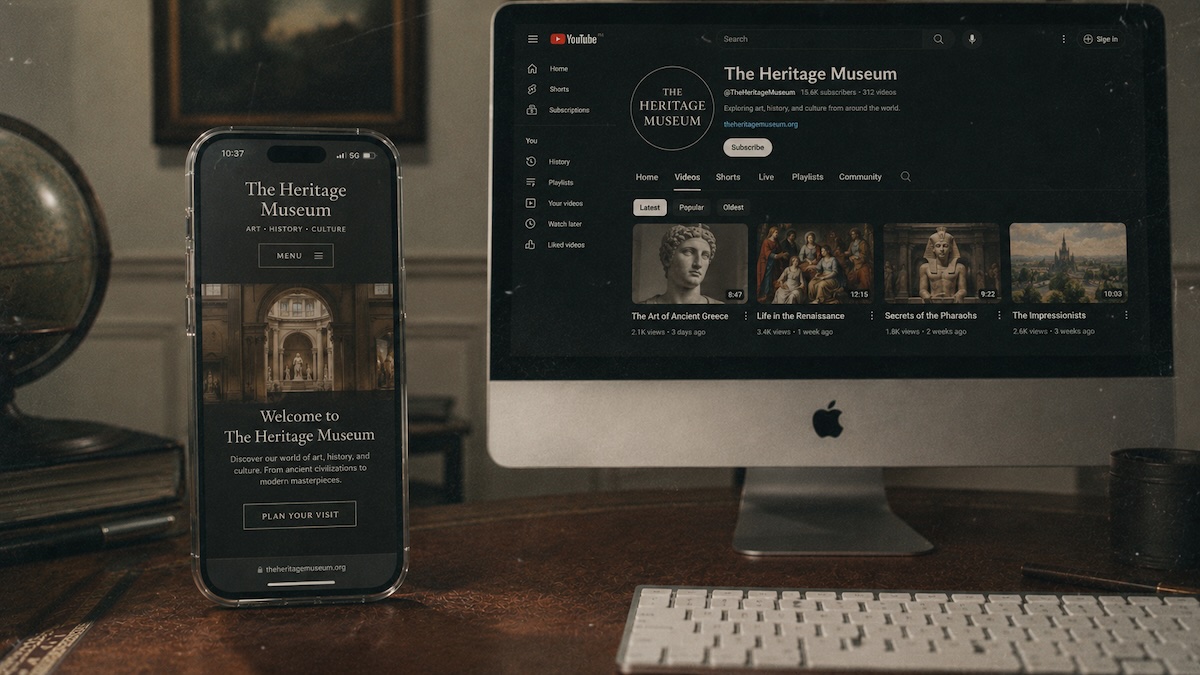
In a hyperconnected world where millions of people turn to screens before they step through doors, the question for museums is no longer whether to be online, but how to be online with purpose. The internet has fundamentally altered the relationship between cultural institutions and their audiences. No longer gatekeepers of knowledge behind grand facades, museums now exist in a parallel digital dimension where value must be created, not assumed.
A landmark study by Padilla-Meléndez and del Águila-Obra, published in the International Journal of Information Management, examined how museums worldwide are using the web and social media to create value online. Their research offers a framework that is as relevant today as it was when first published, perhaps even more so as the pace of digital transformation accelerates. It provides heritage professionals with a lens through which to understand not just what museums are doing online, but why some approaches succeed where others falter.
From Static Displays to Living Digital Spaces
The museum website was once little more than a digital leaflet: opening hours, ticket prices, a map. But the study reveals that the most forward-thinking institutions have moved far beyond this. Their websites and social media channels have become living digital spaces, extensions of the museum experience rather than mere supplements to it.
The researchers analysed museums across the globe, looking at the sophistication of their web presence and their engagement with social media platforms. What they found was not a uniform march towards digital excellence, but a spectrum of approaches shaped by institutional culture, resources, and strategic vision.
At the heart of the study is a simple but powerful idea: museums can be grouped into strategic archetypes based on how they approach digital technology. These archetypes, borrowed from organisational strategy theory, help explain why some museums thrive online while others remain stuck in the digital equivalent of a dusty display case.
The Three Digital Personalities: Defender, Analyser, and Prospector
The study identifies three strategic archetypes among museums: the Defender, the Analyser, and the Prospector. Each represents a fundamentally different attitude towards digital innovation, and understanding them is key to understanding the landscape of museum digital strategy.
The Defender is the cautious institution. Defenders use the web primarily as a broadcasting tool. Their websites are informational, their social media presence is minimal or one-directional, and their digital strategy is focused on protecting and promoting the existing brand. There is nothing inherently wrong with this approach, but it limits the museum's ability to create genuine online value. Defenders tend to see the internet as a necessary obligation rather than an opportunity. Their websites tell you what to see and when to visit, but they rarely invite you to participate, explore, or connect.
The Analyser sits in the middle ground. Analysers watch what others are doing, adopt proven strategies, and incrementally improve their digital offerings. They are not pioneers, but they are not standing still either. An Analyser might look at what Tate Modern is doing on Instagram and adapt a similar approach for their own institution. They are responsive to trends but rarely set them. This archetype represents the majority of museums: institutions that recognise the importance of digital engagement but approach it with caution and pragmatism.
The Prospector is the innovator. Prospectors are the museums that push boundaries, experiment with new platforms, and seek to create entirely new forms of digital value. They see the web not as a mirror of the physical museum but as a space with its own possibilities. The Museum of Modern Art (MoMA) in New York, for example, has long been a Prospector, using its digital channels to commission original content, host virtual exhibitions, and engage audiences in creative dialogue. Prospectors accept the risk that comes with experimentation because they understand that the greatest rewards in the digital space go to those who dare to be different.
What makes this framework so useful is that it is not prescriptive. Not every museum needs to be a Prospector. The right approach depends on the institution's mission, audience, and resources. But every museum should at least understand where it sits on this spectrum and make a conscious choice about where it wants to be.
Understanding How Museums Create Online Value
Beyond the archetypes, the study identifies four key drivers of online value creation that apply to any museum, regardless of its strategic orientation. These drivers, drawn from e-business theory, provide a practical framework for understanding how digital activities translate into real value for both the institution and its audience.
The first driver is Efficiency. The web allows museums to do things faster, cheaper, and at greater scale. Online ticketing, digital catalogues, virtual tours, and automated visitor information all reduce costs and improve the visitor experience. Efficiency is the baseline of digital value creation: necessary, but not sufficient on its own.
The second driver is Complementarity. This refers to the way digital offerings can enhance the physical museum experience, and vice versa. A museum that offers a mobile app with additional context for its exhibitions, or a website that lets visitors explore objects they saw in person in greater depth, is creating complementary value. The key insight here is that the digital and physical experiences should not compete but should reinforce each other. The British Museum's 3D scans of key objects, for instance, do not replace the experience of seeing the Rosetta Stone in person. Instead, they deepen engagement and extend the museum's reach to audiences who may never visit London.
The third driver is Lock-In. In business terms, lock-in refers to the factors that keep customers coming back. For museums, digital lock-in might come from membership portals, personalised recommendations, educational resources that teachers rely on, or social media communities that visitors feel part of. The National Gallery's online learning resources, used by schools across the country, create a form of lock-in that ensures repeated engagement and long-term audience development.
The fourth driver is Novelty. This is the most exciting and the most challenging driver of online value. Novelty means offering something genuinely new, something that could not exist without the digital medium. The Prado's virtual galleries, which allow visitors to explore masterpieces in extraordinary detail, or the use of augmented reality to bring historical artefacts to life, are examples of digital novelty that create value in ways that have no physical equivalent.
Together, these four drivers provide a comprehensive framework for thinking about museum digital strategy. The most successful institutions are those that combine all four, using efficiency as a foundation, building complementarity between physical and digital, creating lock-in through community and resources, and pursuing novelty to differentiate themselves in an increasingly crowded digital landscape.
Social Media: The Modern Agora of Culture
The study pays particular attention to the role of social media, and for good reason. Social media has transformed the relationship between museums and their audiences from a monologue to a dialogue, from broadcasting to conversation.
Nina Simon's concept of the "Museum 2.0" is relevant here. Simon argued that museums should become participatory institutions, inviting visitors to contribute, share, and co-create. Social media is the most powerful tool available for achieving this vision. When a visitor posts a photo from a museum on Instagram, shares a thought about an exhibition on Twitter, or discusses a historical topic in a Facebook group, they are participating in the museum's mission in a way that was impossible a generation ago.
The study found that museums using social media most effectively were those that understood it as a two-way communication channel. Rather than simply pushing content out, they were listening, responding, and adapting based on what their audiences said and did. They used social media not just to promote exhibitions but to tell stories, ask questions, celebrate their communities, and invite feedback.
Digital word-of-mouth, the study argues, is one of the most powerful forces in museum marketing today. A single viral post can reach millions of people at zero cost. But virality cannot be manufactured. It comes from authenticity, creativity, and a genuine connection with the audience. Museums that try to game social media algorithms without investing in genuine engagement will find their efforts hollow and short-lived.
Lessons for Cultural Leaders and Curators
The findings of this study have clear implications for museum professionals at every level. Whether you are a director setting institutional strategy, a curator developing an exhibition, or a communications officer managing social media, the principles of online value creation are relevant to your work.
Here are five guiding principles drawn from the research:
1. Strategic coherence. Your digital strategy should be an expression of your institutional mission, not a bolt-on afterthought. If your museum's mission is to make art accessible to everyone, your digital channels should embody that principle. If your mission is to preserve and interpret a specific collection, your online presence should reflect the depth and rigour of that work. The most effective digital strategies are those that are inseparable from the institution's core identity.
2. Continuous measurement. You cannot improve what you do not measure. The study emphasises the importance of tracking digital engagement, not just in terms of vanity metrics like follower counts, but through meaningful indicators like time spent on site, depth of engagement, repeat visits, and conversion from online engagement to physical attendance or membership.
3. Creative experimentation. The Prospector archetype reminds us that innovation requires risk. Not every experiment will succeed, but the museums that never experiment will never discover new ways to create value. Allocate resources for experimentation, celebrate creative failures as learning opportunities, and give your team the freedom to try new things.
4. Community building. Social media is not a megaphone; it is a gathering place. The museums that build genuine communities around their content, whether through discussion groups, user-generated content campaigns, or interactive programmes, will create the deepest and most lasting value. Community building requires patience, consistency, and a willingness to give up some control over the narrative.
5. Balance and authenticity. In the rush to be digital, museums must not lose what makes them special. The authority, scholarship, and curatorial expertise that museums bring to the interpretation of culture and history are irreplaceable. The best digital strategies amplify these qualities rather than diluting them. Authenticity is the currency of the digital age, and museums are inherently rich in it.
The Expanding Horizon of the Digital Museum
Since the study was published, the digital landscape has continued to evolve at a breathtaking pace. Artificial intelligence is opening new possibilities for personalised museum experiences, from chatbots that can answer visitor questions in multiple languages to algorithms that recommend artworks based on individual preferences. Augmented reality is transforming how we interact with objects and spaces. And the pandemic accelerated digital adoption across the heritage sector, forcing even the most reluctant institutions to embrace online engagement.
But the fundamental principles identified in the study remain as relevant as ever. Technology changes, but the need for strategic clarity, audience understanding, and authentic engagement does not. The museums that will thrive in the coming decades are those that see digital not as a separate department or a box to be ticked, but as a fundamental dimension of their mission.
The democratisation of access is perhaps the most profound implication of the digital museum. A student in rural India can now explore the galleries of the Louvre. A researcher in Brazil can access the archives of the British Library. A family in a remote part of Scotland can take a virtual tour of a museum they could never afford to visit in person. This is not a replacement for the physical experience, but it is a revolution in access that has the potential to transform who gets to engage with culture and heritage.
There are challenges, of course. Digital exclusion remains a reality for many communities. The cost of maintaining and updating digital infrastructure is significant. And there are genuine questions about how to preserve the contemplative, immersive quality of the museum experience in a digital environment designed for speed and distraction. But these are challenges to be navigated, not reasons to retreat.
A New Chapter for Cultural Connection
The study by Padilla-Meléndez and del Águila-Obra offers more than an academic analysis. It offers a vision of what museums can become in the digital age: institutions that create value not just within their walls but across the web, institutions that engage audiences not as passive consumers but as active participants, and institutions that use technology not as an end in itself but as a bridge to deeper cultural connection.
The heritage revolution is not about abandoning tradition. It is about extending it. The museums that embrace this challenge, that see the web as a space for creativity, community, and scholarship, will not only survive the digital transformation but will lead it. And in doing so, they will ensure that the treasures of human culture and history are not locked behind glass but are alive, accessible, and valued by audiences around the world.