
How the Public Really Feels About AI in Museums, Libraries, and Archives
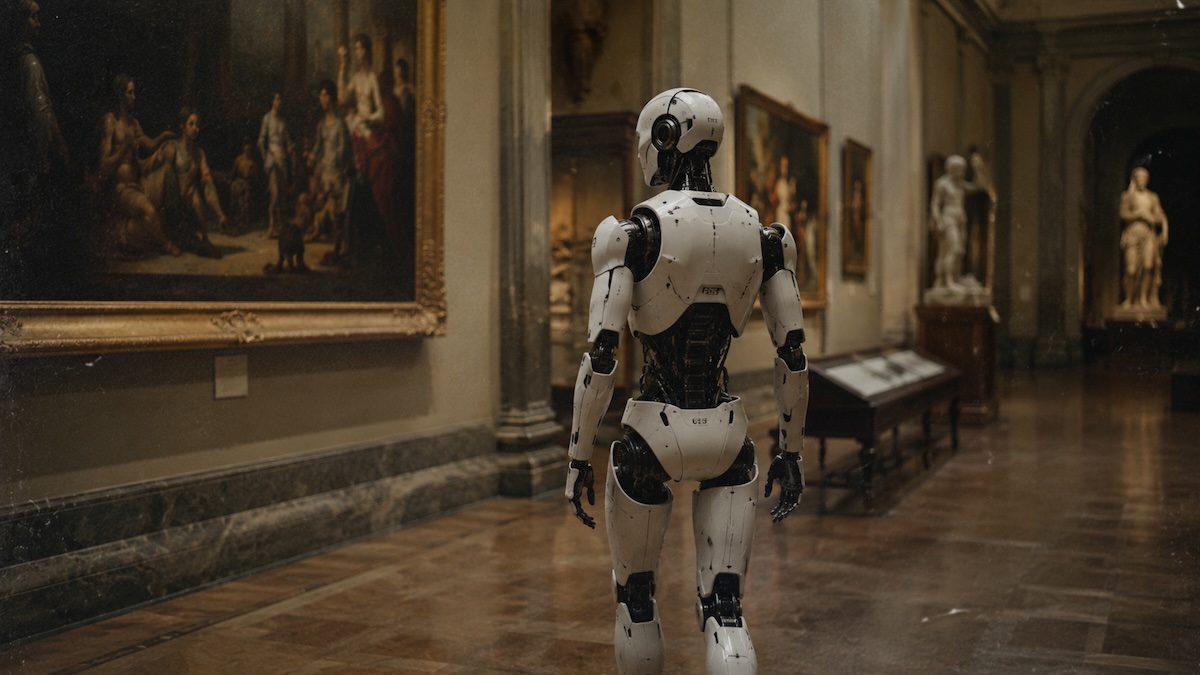
Artificial intelligence has become part of everyday life with a speed that has taken many people by surprise. From the chatbots that answer our customer service queries to the recommendation algorithms that shape what we see on social media, AI is woven into the fabric of modern experience. But what happens when this technology enters the spaces we associate with trust, memory, and cultural authority? What does the public really think about AI in galleries, libraries, archives, and museums?
A major new study by Gupta, Braidwood, and Li at the University of Alabama set out to answer exactly this question. The researchers analysed more than 215,000 posts on X (formerly Twitter) to understand how the public discusses and feels about generative AI in what they call the GLAM sector: galleries, libraries, archives, and museums. Using a combination of topic modelling, sentiment analysis, and emotion detection, the study offers one of the most comprehensive pictures yet of public attitudes towards AI in the cultural heritage space.
Our findings reveal distinct themes across GLAM institutions, from the enthusiastic embrace of AI-generated art in museums and galleries to significant concerns about trust and authenticity in archival contexts. Sentiment analysis reveals a predominantly positive public discourse, while emotion detection uncovers nuanced responses, including notable apprehension in library and archival discussions.
Libraries
The library sector emerged as one of the most actively discussed areas in the dataset. Conversations about AI and libraries frequently centred on ChatGPT and its implications for cataloguing, reference services, and information literacy. The topic of chatgpt ai librarians alone generated more than 8,000 tweets, making it one of the most prominent discussion threads in the entire study.
Public opinion was notably divided. On one hand, many users recognised the potential for AI to enhance library services, particularly in areas like automated cataloguing, personalised reading recommendations, and improved search functionality. On the other hand, there was significant ambivalence about the role of the librarian in an AI-enhanced world. Would AI complement the librarian's expertise, or would it gradually render the profession obsolete?
Emotionally, the dominant response to AI in libraries was surprise. This is telling. It suggests that for many people, the idea of AI in libraries still feels novel and unexpected. Libraries are associated with books, quiet study, and human guidance. The arrival of generative AI disrupts these associations in ways that many users are still processing.
These discussions likely reflect the general public's concerns about AI's impact on knowledge-based professions and raise important questions about the evolving role of librarians in an AI-augmented information landscape.
Archives
The archival sector presented a strikingly different picture. Where library discussions were characterised by curiosity and ambivalence, archival conversations were dominated by concerns about truth and authenticity. Archives hold a unique position in the cultural landscape. They are the institutions we trust to preserve the unaltered record of the past. When AI enters this space, it raises profound questions about the integrity of the historical record.
The study found that archives attracted the highest levels of negative emotion in the dataset. Anger and fear were both more prevalent in archival discussions than in any other GLAM sector. Users expressed deep concern about the possibility of AI-generated material contaminating archival collections, making it difficult or impossible to distinguish genuine historical documents from fabricated ones.
This anxiety is not abstract. In an era of deepfakes and synthetic media, the idea that archives might inadvertently preserve AI-generated content as historical fact is genuinely alarming. The study found that public trust in archives is closely tied to the belief that their contents are authentic and unmediated. Any technology that threatens this trust is met with resistance.
Archival users tended to distrust GenAI, with discussions frequently focusing on the potential for AI-generated content to compromise historical accuracy and authenticity. The archival community's emphasis on provenance and original order makes it particularly sensitive to technologies that could blur the line between authentic and generated content.
Museums and Galleries
The museums and galleries sector told yet another story. Here, the dominant emotional response was enthusiasm. Users were excited about the creative possibilities of AI, particularly in the visual arts. Tools like DALL-E, Midjourney, Gemini, and Sora were frequently mentioned in connection with museum and gallery contexts, and the conversation was overwhelmingly focused on the potential for AI to create new forms of art and new kinds of visitor experience.
Happiness was the most common emotional response in museum and gallery discussions, a stark contrast to the fear and anger that characterised archival conversations. This suggests that the public sees AI as a natural fit for the creative and experiential dimensions of museums, even as they harbour reservations about its use in more sensitive, trust-dependent contexts like archives.
The study also found that museum discussions were more likely to focus on the future than on current practice. Users were imagining what AI could do for museums, rather than critiquing what it was already doing. This forward-looking orientation is significant because it suggests that public expectations for AI in museums are high, and that institutions will need to move carefully to meet those expectations without overpromising or underdelivering.
Museums and galleries exhibited the highest enthusiasm for GenAI, particularly regarding AI-generated art and immersive experiences. The creative nature of these institutions appears to make them more receptive to AI as a tool for artistic expression and visitor engagement.
Emotions Across the Cultural Landscape
One of the study's most valuable contributions is its use of a BERT-based emotion detection model to map the emotional landscape of the public conversation. The model identified five primary emotions: happiness, surprise, anger, fear, and sadness. Each GLAM sector had its own distinct emotional signature.
Surprise was the dominant emotion overall, which makes sense given how rapidly generative AI has entered public consciousness. Many people are still coming to terms with what the technology can do, and their initial response is one of astonishment. Happiness was most prevalent in museum and gallery discussions, reflecting the excitement around AI-generated art and immersive experiences. Anger and fear were concentrated in archival discussions, driven by concerns about authenticity and trust. Sadness appeared most frequently in library discussions, often linked to anxieties about job displacement and the loss of the traditional librarian role.
Surprise dominated emotional responses across all GLAM sectors, reflecting the novelty and rapid emergence of GenAI technologies. However, the distribution of secondary emotions varied significantly by sector, with museums showing the highest levels of happiness and archives showing the highest levels of anger and fear.
The Road Ahead
The study's findings have important implications for how cultural institutions approach AI adoption. The public is not uniformly enthusiastic or uniformly sceptical. Attitudes vary dramatically depending on the type of institution and the specific application of AI being discussed. A one-size-fits-all approach to AI adoption is unlikely to succeed.
For museums and galleries, the path forward may be relatively straightforward. The public is broadly receptive to AI as a creative and experiential tool, and institutions can build on this enthusiasm by experimenting with AI-generated art, interactive exhibitions, and personalised visitor experiences. The risk here is not public resistance but public disappointment if the technology fails to live up to expectations.
For libraries, the challenge is more nuanced. AI has genuine potential to enhance library services, but the public needs reassurance that the librarian's role will be preserved and valued. Libraries that adopt AI will need to communicate clearly about how the technology is being used and what it means for the people who work there.
For archives, the road ahead is the most difficult. Public trust in archives is non-negotiable, and any AI application that could be perceived as threatening the integrity of the historical record will face significant pushback. Archives that wish to explore AI will need to proceed with extreme caution, prioritising transparency and authenticity at every step.
Responsible GenAI adoption requires sector-specific strategies that acknowledge the unique values, concerns, and expectations of each institutional type. What works for museums may not work for archives, and what excites gallery visitors may alarm library patrons.
What the study ultimately reveals is that the public's relationship with AI in cultural institutions is deeply shaped by the values they associate with those institutions. Museums are places of creativity and exploration, so AI is welcomed as a creative tool. Libraries are places of knowledge and professional expertise, so AI is met with curiosity tempered by anxiety about displacement. Archives are places of truth and authenticity, so AI is regarded with suspicion and concern.
For cultural institutions navigating this landscape, the lesson is clear. Technology adoption is not just a technical challenge. It is a question of trust, identity, and values. The institutions that succeed in integrating AI will be those that listen to their audiences, understand their concerns, and demonstrate that technology and humanity can work together in service of culture, memory, and the public good.