
Presenting History: Social Media and Public History
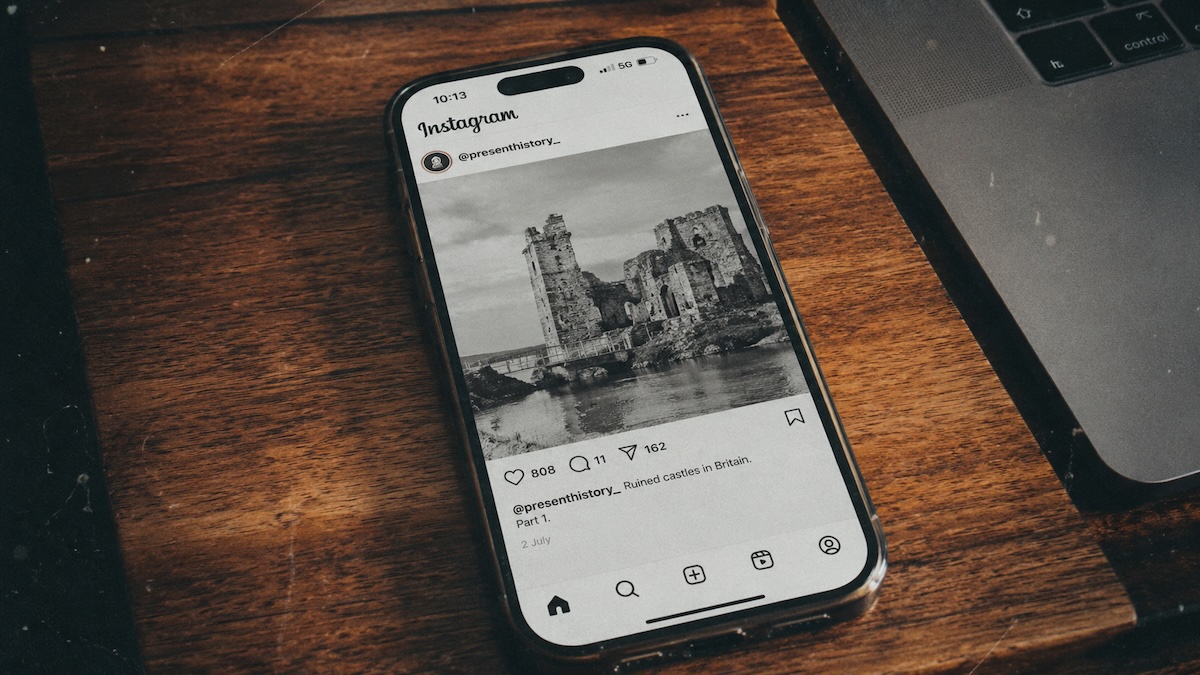
Social media is now a pervasive force in modern life. It shapes how we communicate, how we form identities, and how we understand the world around us. The statistics are staggering: as of recent estimates, there are approximately 3.96 billion social media users worldwide. The average person spends ninety-five minutes per day on social media platforms and maintains accounts on an average of seven different platforms. These are not marginal figures. Social media has become one of the primary arenas in which public life takes place.
For heritage sites and museums, this transformation is impossible to ignore. The experience of visiting a historic place has been fundamentally altered by the presence of social media. Selfies in front of famous artworks, photographs of historic interiors shared on Instagram, likes and comments on posts about exhibitions: these are no longer peripheral to the visitor experience. They are, for many visitors, a fundamental part of it. The act of visiting a museum or heritage site is now inseparable from the act of performing that visit for a digital audience.
This has profound implications for how history is presented to the public. Museums and heritage sites have a responsibility to present history accurately, thoughtfully, and with integrity. But social media operates by different rules. It rewards engagement, emotion, and shareability. It compresses complex narratives into bite-sized content. And it introduces a layer of performativity that shapes everything that passes through it.
The challenge is real and growing. Holocaust denial content has appeared on Facebook. Misinformation about historical events circulates freely on Twitter and TikTok. Eva Pfanzelter, writing about digital public history, has observed that museums and heritage organisations have often lagged behind in their response to these challenges, failing to recognise the speed at which historical narratives can be distorted in digital spaces. The gap between the careful, evidence-based work of historians and the rapid, performative nature of social media is one of the defining tensions of public history in the twenty-first century.
Christoph Bareither has written compellingly about how personal experiences shared on social media become collective ones. When a visitor posts a photograph of a war memorial on Instagram with a personal reflection, that private moment becomes a public act of commemoration. When someone shares a family story connected to a historic site, that individual narrative enters a collective conversation about the meaning of the past. Social media does not merely transmit history; it transforms it, blending personal experience with public discourse in ways that are unprecedented.
Meghan Lundrigan, drawing on the work of Lev Manovich, has explored how photography and social media shape identity. Every photograph posted on social media is both a record and a performance. The choice of what to photograph, how to frame it, what filter to apply, what caption to write: these are all acts of identity construction. When applied to heritage and history, this means that the way history appears on social media is always filtered through the identity of the person sharing it.
This leads to a crucial distinction in the academic literature between representationalist and performative views of social media. The representationalist view holds that social media is a neutral medium that reflects reality. The performative view, which is increasingly dominant among scholars, holds that social media actively shapes and constructs the reality it appears to represent. Every post, every share, every comment is not merely a reflection of what happened but a performance that creates meaning.
For heritage sites and museums, this creates a double-barrelled issue. On one side, there is the visitor experience itself, which is now shaped by the awareness that it will be shared on social media. Visitors choose which rooms to photograph, which objects to focus on, and which stories to tell based partly on what will perform well on their feeds. On the other side, there is the inherent performativity of the heritage organisation's own social media accounts, which must curate, select, and present history in ways that are shaped by the demands of the platform.
Understanding this performativity is essential for anyone working in public history today. Here are seven ways in which historical content is affected by the performative nature of social media:
1. Content is crafted for emotional impact
Social media algorithms reward content that generates engagement, and engagement is driven by emotion. This creates a powerful incentive to craft historical content for maximum emotional impact rather than maximum accuracy. The result is what might be called "clickbait history": content that prioritises the sensational, the shocking, or the heartwarming over the nuanced and the complex.
A post about a medieval battle that emphasises the gruesome details of combat will outperform a post about the political negotiations that preceded it. A photograph of a beautiful country house will generate more engagement than an analysis of the economic conditions that built it. This is not necessarily the fault of the heritage organisation. It is a structural feature of the platform. But it means that the history that reaches the widest audience on social media is often the history that has been most aggressively shaped for emotional consumption.
Heritage organisations must be aware of this dynamic and resist the temptation to let the algorithm dictate their historical narrative. Emotional resonance is not the enemy of good history, but it must be balanced with accuracy, context, and intellectual honesty.
2. Content is picked to support an overall narrative
Every social media account tells a story about itself. For heritage organisations, this means that the content shared on social media is selected to support a particular narrative about the institution and its mission. This is not inherently problematic, but it does mean that certain aspects of history may be emphasised while others are downplayed or omitted.
The National Trust, for example, faced significant public debate when it published a report examining the connections between its properties and the histories of colonialism and slavery. The decision to engage with these difficult histories on social media was a deliberate narrative choice, one that aligned with a broader institutional commitment to telling more inclusive stories. But it also demonstrated how the selection of content is always a curatorial act, shaped by the institution's values, priorities, and audience.
Heritage organisations should be conscious of the narratives they are constructing through their social media presence and ask themselves regularly: whose stories are we telling, whose are we leaving out, and why?
3. Content is interpreted through experience rather than fact
When visitors share their experiences of heritage sites on social media, they interpret history through the lens of personal experience rather than historical fact. This can be enriching, bringing new perspectives and emotional depth to historical narratives. But it can also lead to misinterpretation and distortion.
A visitor to a First World War battlefield, for example, might post a photograph with a caption that reflects their personal feelings of sadness and loss. This is a valid and important response to the site. But if the caption includes historical claims that are inaccurate, such as a misattribution of a battle or an incorrect casualty figure, the emotional power of the post may cause the inaccuracy to spread unchallenged. On social media, emotional truth often carries more weight than historical truth, and the line between the two can become dangerously blurred.
Heritage organisations can play a vital role here by providing accurate, accessible historical information that visitors can draw on when they share their experiences. The goal is not to police visitor responses but to ensure that the factual foundation is solid enough to support them.
4. Content is at the mercy of the account manager's subjectivity
Behind every heritage organisation's social media account is a person or a team making daily decisions about what to post, how to frame it, and when to share it. These decisions are inevitably shaped by the subjectivity of the individuals involved: their interests, their knowledge, their biases, and their understanding of what will resonate with the audience.
This is not a criticism. All history is mediated through human interpretation. But social media amplifies this subjectivity because of the speed and informality of the medium. A curator writing a museum label has time for research, peer review, and editorial oversight. A social media manager posting a daily update may not have the same luxury. The result is that the history presented on social media can be more idiosyncratic, more personal, and potentially more prone to error than the history presented through traditional museum channels.
Heritage organisations should invest in training for social media staff, ensuring that those responsible for presenting history online have the knowledge and support they need to do so accurately and thoughtfully. Editorial guidelines, fact-checking processes, and regular review of social media content can help mitigate the risks without stifling creativity.
5. Content is entirely democratised
One of the most radical effects of social media on public history is the democratisation of historical discourse. Social media invites the public into the historiographical process in a way that was previously impossible. Anyone with a smartphone can share a historical photograph, tell a family story, challenge an established narrative, or offer a new interpretation of a historical event.
This democratisation is, in many ways, a positive development. It has brought marginalised voices into historical conversations, challenged the authority of established institutions, and created a richer, more diverse public discourse about the past. Communities that have been excluded from traditional historical narratives have used social media to tell their own stories and demand recognition.
But democratisation also brings challenges. Not all contributions to historical discourse are equally informed. Misinformation, conspiracy theories, and ideologically motivated distortions of history can spread just as easily as legitimate scholarship. The absence of editorial gatekeeping means that the quality of historical content on social media varies enormously, and audiences may struggle to distinguish between reliable and unreliable sources.
Heritage organisations have an important role to play as trusted voices in this democratised landscape. By engaging with public historical discourse on social media, they can model good historical practice, correct misinformation, and support community-generated content that is accurate and meaningful.
6. Content can be used for cross-cultural connection
Social media has the remarkable ability to connect people across geographical and cultural boundaries, and this extends to historical content. Stories that might once have been confined to a local or national audience can now reach a global one, creating opportunities for cross-cultural dialogue and understanding.
The story of Olaudah Equiano, the formerly enslaved man who became one of the most prominent voices in the abolition movement, has been shared and discussed across social media platforms by audiences on multiple continents. The story of John Blanke, a Black trumpeter at the court of Henry VIII, has been used by heritage organisations to challenge assumptions about the diversity of Tudor England and to connect with audiences who see their own heritage reflected in these stories.
These cross-cultural connections are one of the great strengths of social media as a tool for public history. They allow heritage organisations to reach audiences they could never access through traditional means and to demonstrate the universal relevance of the stories they tell. But they also require sensitivity and awareness. Presenting history to a global audience means engaging with a diversity of perspectives, and heritage organisations must be prepared to listen as well as to speak.
7. Content can be used for debate, but truth can get lost
Social media is, by design, a space for debate. Historical content shared on social media often generates vigorous discussion, with users challenging interpretations, offering alternative perspectives, and arguing about the meaning of the past. This is, in principle, exactly what public history should encourage: active engagement with historical questions rather than passive consumption of historical facts.
But the structure of social media debate can be hostile to historical truth. Arguments are compressed into character limits. Nuance is sacrificed for impact. Positions harden into polarised camps. Bad-faith actors can hijack historical discussions to promote agendas that have nothing to do with the past. And the most extreme or provocative claims often receive the most attention, regardless of their accuracy.
The risk is that social media transforms historical debate from a search for understanding into a performance of identity, where what matters is not what is true but what is popular or what reinforces existing beliefs. Heritage organisations must navigate this terrain carefully, participating in debates with authority and integrity while resisting the temptation to be drawn into the performative dynamics that distort them.
The answer is not to withdraw from social media or to treat it as a hostile space. Social media is where the public conversation about history is happening, and heritage organisations cannot afford to be absent from it. But they must go in with their eyes open, understanding the forces that shape historical discourse online and working actively to ensure that the history they present is as accurate, honest, and thoughtful as possible.
The performative nature of social media is not something that can be overcome. It is a fundamental feature of the medium. But it can be understood, managed, and even harnessed. Heritage organisations that approach social media with critical awareness, that invest in the skills and knowledge of their teams, and that maintain their commitment to historical integrity will find that social media is not a threat to public history but an extraordinary opportunity to reach new audiences, tell important stories, and keep the past alive in the present.